Pixar movie Up

The team at Pixar often spend years on a single script. This is heartening for any writer who has wondered whether their story carries any weight. Here are my top 5 picks from their 22 storytelling tips which I refer to when diving into a new plot for a children’s novel. Essential reading, I reckon.

#5: You admire a character for trying more than for their successes.

#4: Keep in mind what’s interesting to you as an audience, not what’s fun to do as a writer.

#3: Simplify. Focus. Combine characters. Hop over detours. You’ll feel like you’re losing valuable stuff but it sets you free.

#2: Come up with your ending before you figure out your middle. Seriously. Endings are hard, get yours working up front.

#1: Discount the 1st thing that comes to mind. And the 2nd, 3rd, 4th, 5th – get the obvious out of the way. Surprise yourself.

Happy Monday.

Justin/

Back in the day I used to be a stand-up comic. The love affair lasted seven years. I performed around my home country of New Zealand, in London, and Johannesburg when I was backing packing and ran out of money.

Talk to any comic and the topic of worst gigs always comes up. Mine? Engelbert Humperdink at The Michael Fowler Centre in Wellington. It was so dire I wrote about it in my book UK on a G String.

Three of the hardest things I’ve ever had to do:

1. Do the opening act for Engelbert Humperdinck.
2. Sell my Mini even though I knew the lights weren’t working.
3. Door-to-door busk my way around the UK in the middle of winter.

THE FIRST HAPPENED on a cold night in Wellington, New Zealand. I had been asked to do 15 minutes of stand-up comedy before the great Engelbert came out on stage. This is my break, I thought. This is the big time. Just me and Engelbert. I’m even staying in the same hotel; only he’s on the eleventh floor and I’m on the first, looking at the back of a butcher’s shop.

But that doesn’t matter. I’ve got a mini bar and nice little chocolates on the bed, just like Engelbert. And I’ve got a room-service menu and Sky TV in my room, just like Engelbert.

Then the panic set in. All the material I normally use on stage is targeted at young, drunk people on a Thursday night. As I looked around the Michael Fowler Centre there wouldn’t have been a human under the age of 86; this was to be my downfall.

I was devastated when I found out they were sober.

Most were ladies with purple hair, their sons by their sides looking at me as if to say, ‘You’d better be funny and you better not offend my mum. I paid $80 for this ticket.’ After singing my first song, entitled ‘Kentucky Fried Kitten’, I could see that I had indeed offended his mum and most of the audience. I’m sure if they weren’t asleep the complaints desk would have been inundated.

Before the gig started I had great visions of Engelbert and me touring the country together, playing golf, drinking, and singing songs other than ‘Please Release Me’. Instead, I never met him. The next morning I was just glad to be alive. It was as if I had been thrown into the comedy equivalent of going over the top of the trenches. I lay in the bath, eating chocolates and watching ‘The Karate Kid’.

engelbert-humperdi-2624

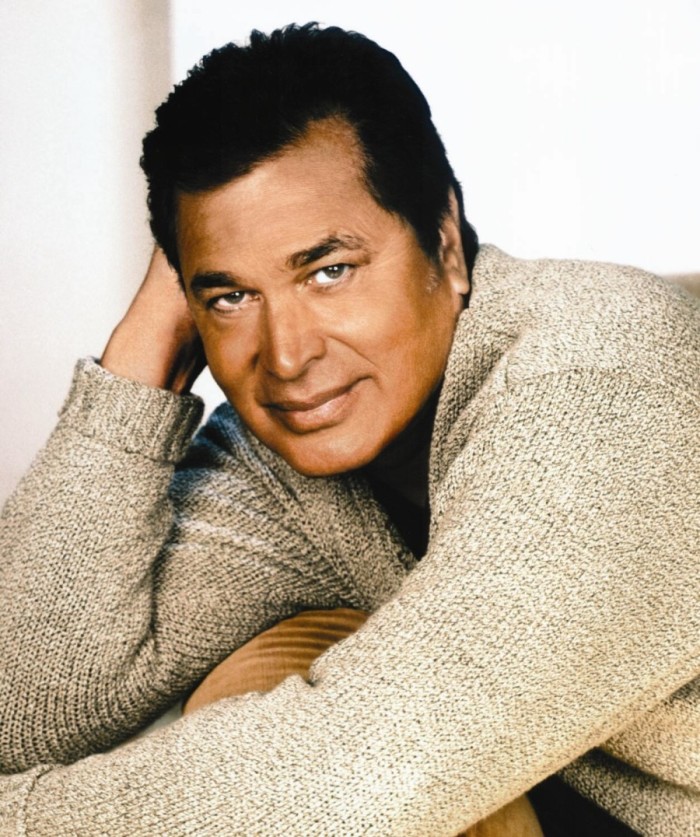
[Englerbert Humperdink. Without the author. Who he never met. Nor played golf with.]

This opportunity, offered to me by a boy named Kit at a school talk in Nelson, sums up why I write for kids. They have no fear and no filters. Their heads aren’t clogged with mortgages, work woes or what to cook for dinner. So they’re not allowed ice cream for dinner, or to stay up past ‘X-Factor,’ but nothing tops climbing trees, licking the bowl or having a fist fight with your best mate.

For the past ten years I’d focused on writing non-fiction travel (UK on a G-StringBowling Through India) as well as humour (Kiwi SpeakRugby Speak). In truth, I wanted to write middle-grade fiction, like my hero Roald Dahl. But first I had to meet someone who knew what they were doing. That someone was Joy Cowley, who I accosted one day at the Story Lines festival in Auckland. A few days later – when she’d read my stories – she agreed to be my ‘Yoda.’ She is a very generous and smart lady.

Then one day I had the idea for Shot, Boom, Score! It came while on the sideline at my daughters’ soccer match. Like many kids, sport played a major role in my childhood. As did rewards for doing well. Many a parent has bribed their kids with a ‘pie for a try’ or ‘movie tickets for a wicket.’ With Toby in Shot, Boom, Score! I wanted to take this theme to a new level. Here is a boy who struggles with school, but excels at sport. When his father sets him the GameBox V3 Challenge Toby thinks he’s hit the jackpot. Sadly, he hasn’t accounted for class bully Malcolm McGarvy – who does his best to ruin the party.

Kids can be ruthless critics. If something stinks they’ll let you know. So it was with a certain amount of relief when my nine-year-old daughter Sophie (who was having Shot, Boom, Score! read to her class) came home and said, ‘Dad, even the bullies love this story – and they never share their feelings!’ Here’s hoping many other kids enjoy the book.

P.S. I did end up dedicating a novel to Kit, but as of yet haven’t seen any money.