

img_5402

This past week I was fortunate to join other Kiwi entrepreneurs and business peeps on a state-level delegation to Beijing and Shenzhen, China.

We visited innovation and tech hubs, medical and nuclear plants, attended a BioTech summit and had one too many 12-course meals.

Our first stop was a dinner in Beijing with Madame Qiu, Chinese Minister for Foreign Affairs (centre). Miss Qiu was a very cool, accommodating lady who took an interest in all of our respective businesses and projects. Note – regarding formalities below – I thought it was a huggy pic. Wasn’t.

21762834_1514163258642440_8288723668960456347_o

But I’d already seen Beijing once before, and even though there was the novelty of blue sky, it was Southern China’s tech-powerhouse I really wanted to discover.

30 years ago Shenzhen, a 40-minute drive from Hong Kong, had a population of 30,000. Today it’s home to Tencent and Huawei, among other tech giants, and has a population of 19.2 million, all of whom reside in a very liveable city with a lush climate. There are also some pretty big incentives set by the local government to encourage foreign start-ups to set up shop.

If I was 20 and starting out in innovation and tech I’d be there.

21950870_1514637685261664_7719051301588786609_o

Just when you think an idea is too stupid for words or is best left at the bottom of the wine bottle at 4 am, you discover China’s already selling it. Below is the equivalent of Fitbit for chickens. It’s simple – tag the chicken and the device records the steps, meaning you charge more for a dead, but formally fit, chicken.

21686715_1511952175530215_7136135855363981051_o

Those 12-course meals I talked about earlier included the usual Chinese fare, with the added bonus of duck feet, sea cucumber, and a water creature found only in China, the duck-billed golden-line fish.

food

Some dishes, however, awaken your typically dormant vegetarian tendencies.

21950805_1513174805407952_7740738182433045867_o

China leaves a mark, it fires you up. It rips you out of your comfort zone. It confronts and challenges you. It inspires and invigorates. It’s also exhausting. So after a week of travelling madness, I stumbled home after an overnight flight happy to hear a little voice say, ‘Dad, I got new pyjama pants with rockets on them!’

21994074_1514632701928829_2108266026259492655_o

Thanks a ton to NZCYF for a top trip. Xiexie!
the-future-of-you_entry_14-37-35
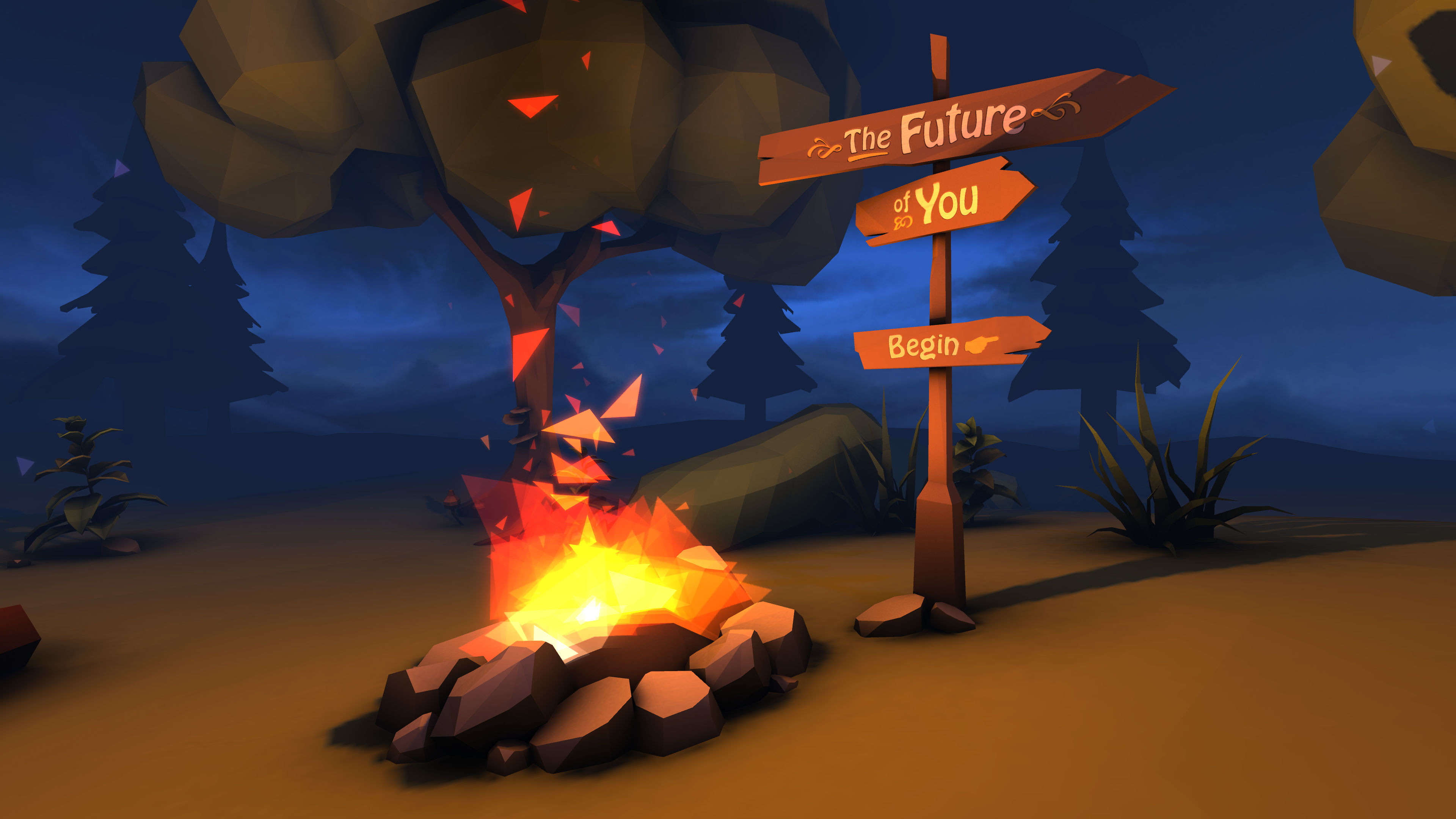
Recently I’ve worked with VR and AR specialists M Theory to create a story for the world’s first virtual reality experience to help prospective university students choose their course of study.

Quite a mouthful, but here’s the blurb.

‘The Future of You’ (Torrens University Australia) takes students on an interactive journey designed to help them find their future career paths. It’s a fully immersive VR environment where students make a series of decisions to discover their personality profile, which uncovers courses that might suit them best.

Launched this month at Torrens University Open Days across Australia, ‘The Future of You’ features a virtual fortune-teller, developed using face mapping technology, who guides students through a series of questions and tests based on American psychologist John L Holland’s theory of career and vocational choice, The Holland Codes.

The virtual environment within ‘The Future of You’ is beautiful and mysterious, with the landscape shifting and changing as the visitor completes each series of questions. Sound and visual cues enhance the experience and create an engaging and lasting memory. At the end of the journey, the fortune teller presents visitors with their personality type in tarot card format, a brief descriptor and suggested career paths best suited to this personality type.

Which sure beats a visit to the school’s guidance counsellor.

‘The Future of You’ operates on Samsung Gear VR headsets. It will also be delivered through schools via Cardboard VR headsets and will be available for public download from the Oculus store from October.

speilberg

I’ve been reading Steven Spielberg: A Biography. Talk about 10,000 hours. He started making films at 10. And here’s why his names suits him so well:

‘The original roots of the Spielberg family may have been in Austria/Hungary, where some of his ancestors before immigrating to Russia may have lived in an area controlled by the Duke of Spielberg.  The Spielberg family name means ‘play mountain,’ a fittingly theatrical name for a playful adult who works in show business and ever since childhood has loved to build and film miniature mountains.

‘Play mountain’ appears as an essential plot device in Close Encounters of the Third Kind and a film production company Steven Spielberg formed early on when he was a college student in Long Beach California was called ‘Playmount Productions.’