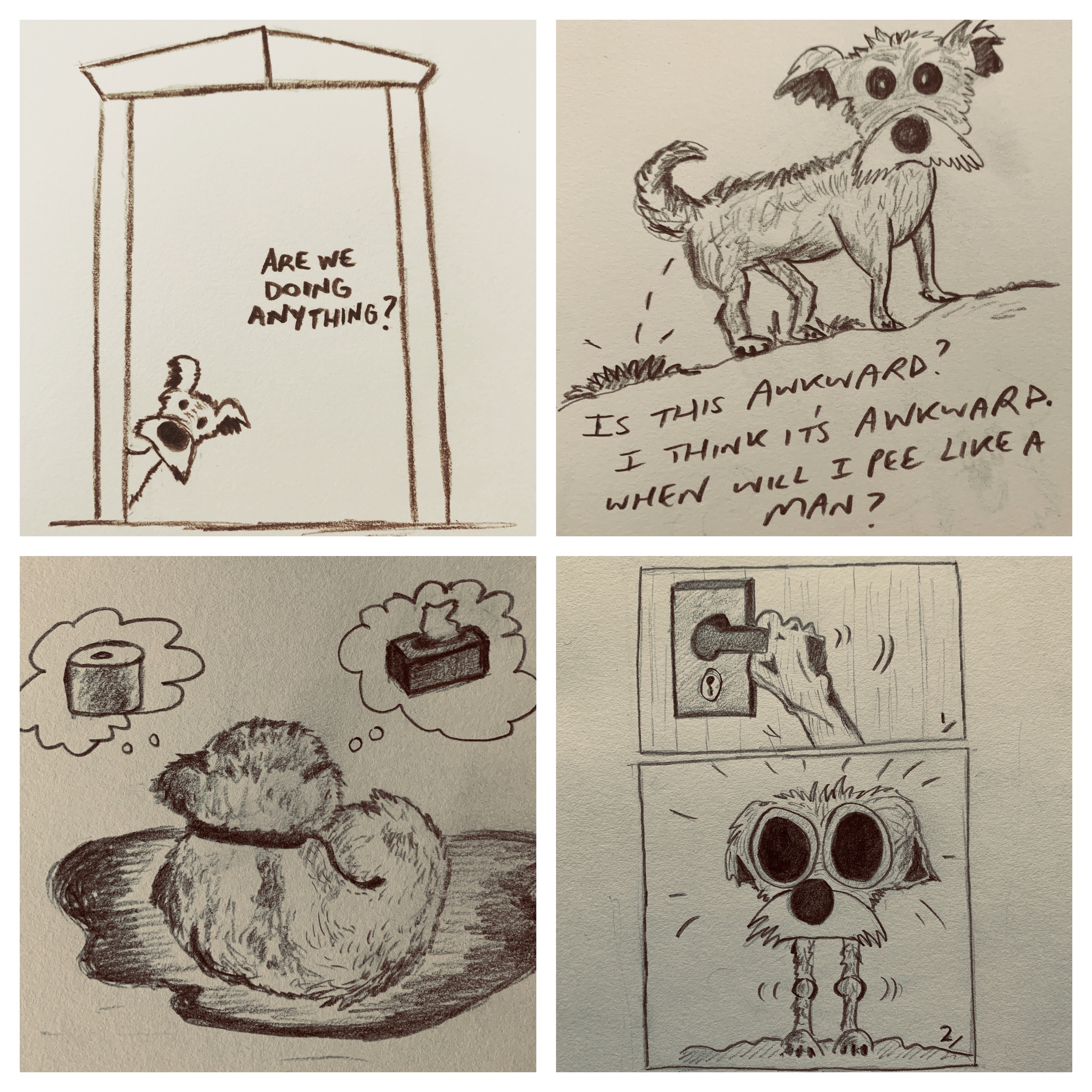
I love him because he’s instantly become a part of our family. Growing up, we always had a dog in our house, (RIP Holly, Amber and Charlie), but I’ve never owned one myself.
Another thing that occupied my time growing up was cartooning. My sister and I never stopped, all mum had to do when she wanted a cask of wine at the neighbours was to supply us with a pen and paper. We’d lie on our stomachs on the carpet and create. We never stopped. Only, over time, I did.
Something else has been on my mind lately. Lifelong learning. We all dream of it, but what if we get to a point in life where we sit comfortably in our comfort zone and quit? Why the hell would you go to university aged 67? What’s the point of learning Spanish if you’re never going to visit? Personally, one day I want to make guitars? Will I?
It’s often said that we revert to doing what we did as kids. For me, that was cartoons. My dog Cooper is teaching me how to do it properly. You’ll get to meet him on my new Insta page. Woof.
It’s
an overcast winter’s day at Hu’s Farm in Riverhead, Auckland. I’m here to hang
with three other artists as they each create a work, to be showcased at an
upcoming exhibition called AMUSE BOUCHE.
Yuan Keru, Shen Piji & David Ye have just arrived from Shanghai and are a part of the ‘2019 Chinese Young Artist Residence Programme.’ Their brief? To create a piece which revolves around ‘luscious intoxications of introductory experiences.’ But first, we need to find our rooms.
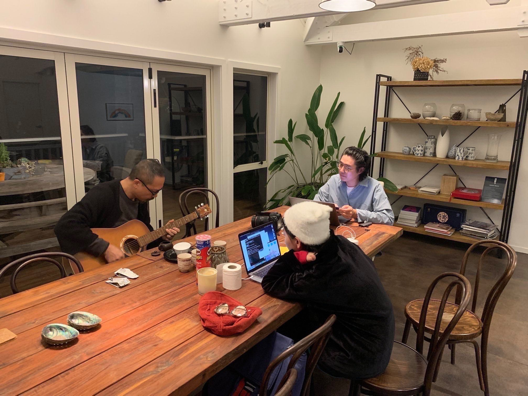
Clockwise – Piji plays guitar while David
and Rubeta dream up ideas.
Day One
As
I’m introduced to the three artists the feeling I have is one of embarrassment.
Why do so many Chinese feel they have to change their names so that Westerners
can pronounce them? Are we really that useless? Yuan Keru is a wonderful young
filmmaker from Shanghai.
Yuan,
lovely name. She introduces herself as Rubeta.
I
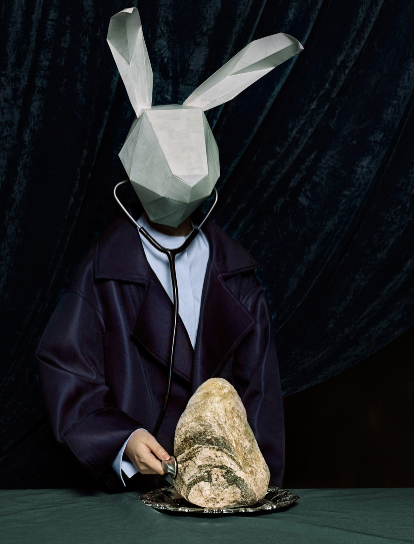
also meet David Ye, a smartly dressed fashion photographer from Shanghai whose
works have featured in ‘Vogue Italy’ and the Asian edition of ‘Forbes’ magazine. He is joyous and cheeky.
Shen Piji is an ex-punk and mixed-media
contemporary artist who I met the previous night at
an informal launch for the project. Piji is dressed like a
monk, all in black, and is dying for a cigarette. A friend of his translates. ‘Piji really misses those
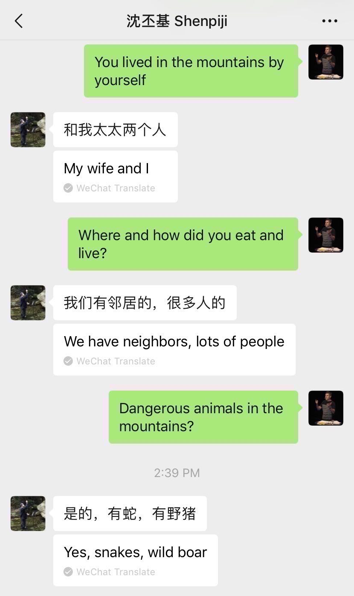
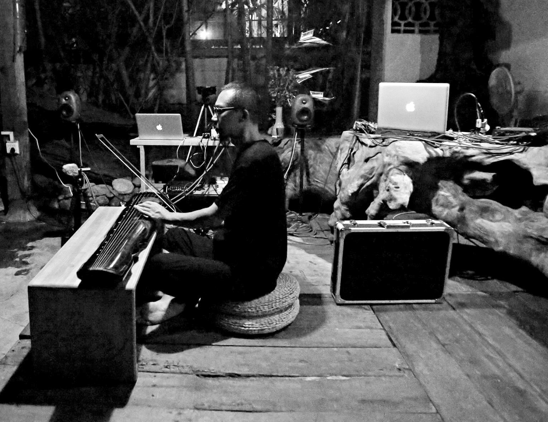
punk days. Did you know he locked himself in the forest for 10 years to learn
the guqin, a plucked seven-string Chinese instrument of the zither family and
the most revered of all Chinese musical instruments. It has a history of about
5,000 years.’
‘Oh, wow.’
‘He
looks old, but he’s not.’
Hu’s
Farm is scattered with laptops, power plugs, leads, camera equipment and
tripods. For the next week we will live in each other’s pockets. Rubeta, Piji
and David will each make something. I’m here to follow their creative journey
and write about it. Who are these artists? What makes them tick? What are their
creative processes? To make some sort of sense of this I download Google
Translate and open the ’Hello Chinese’ app on my phone. Then I remember, much
to the surprise of my new friends, I have a WeChat account, the most popular
social media platform in China.
Technology,
the wonderful enabler.
While
Rubeta and David head to Auckland city to shop for props, I talk to Piji and
soon discover his English is as bad as my Mandarin.
But we find common ground.
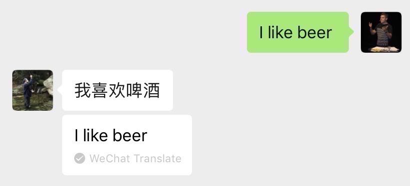
As we drink Lion Red, I punch in a few more words. I want to know about the decade he spent in the forest.
Piji
has worked and lived in Shenzhen, China since 1993. Back then he was
heavily involved in contemporary art and avant-garde music. He left his punk
band ‘Sunflower’ when he fell in love with the guqin and 16 years later would
conduct a ‘Ted Talk’ on how he used the instrument to talk to frogs.
In 2015
Piji placed five pottery jars into a shallow pool in his studio which soon
attracted a group of frogs named Hylarana Daunchina. He used the difference
sizes of the jars to change the volume and frogs’ tone, mixing those sounds
with the sound of the Guqin playing. Piji did this every day and recorded
numerous songs with his new friends.
‘So
you played music to frogs and they talked back?’
I ask. Piji nods. ‘Did you pay them?’
‘I
fed them,’ Piji replies.
‘Wow, that’s amazing. Ever thought of doing the same thing with sheep?’
(Shen Piji the frog whisperer at his home in
Shenzhen.)
David’s
wife Lulu and I concoct a meal made from leftover lamb, ginger, onions, rice
and pumpkin. Piji has a controversial addition, chopped up cheerios from the
fridge. While we cook dinner I learn the word for pumpkin, plate, and rice, and
forget them immediately. I make instant friends by telling everyone I have a
car should anyone need a ride anywhere. Piji is equally excited when he spies
my guitar, which he plays in an instant and confirms I should never attempt a
tune in this man’s company.
I
want to know more about Rubeta’s and David’s works. Rubeta was born in Hangzhou,
China, and currently lives in Shanghai. She graduated with a Masters in fine
art from the School of Inter-Media Art at the China Academy of Art, Hangzhou.
Her artistic practice focuses on exploring the act of painting, spatial rhythm
and narratives in video, combining the emotive experience with history,
mythology and dreams. Her works are melancholic and violent and are often
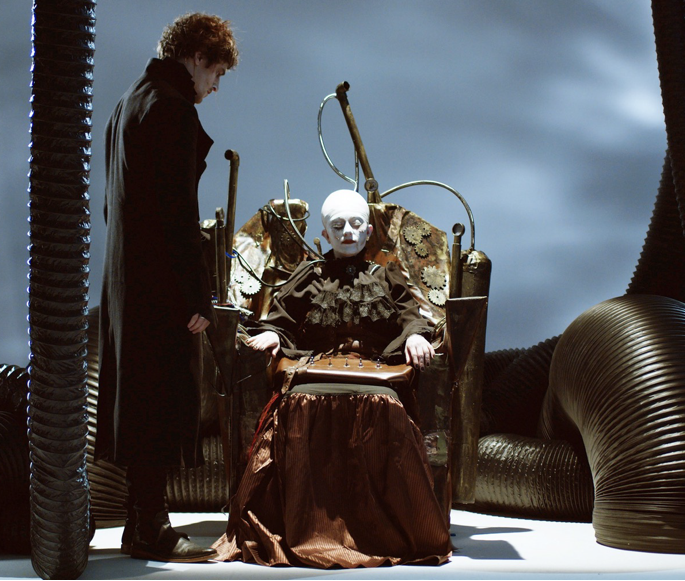
immersed with warmth and poetry. Her film Fleeting
Strangers was selected for the Los Angeles Chinese Film Festival in 2017.
’I
use friends, but I can’t pay them a lot.’
‘But
how do you make such elaborate films on such a small budget?’
Res, a character from Rubeta’s film
‘Fleeting Strangers.’
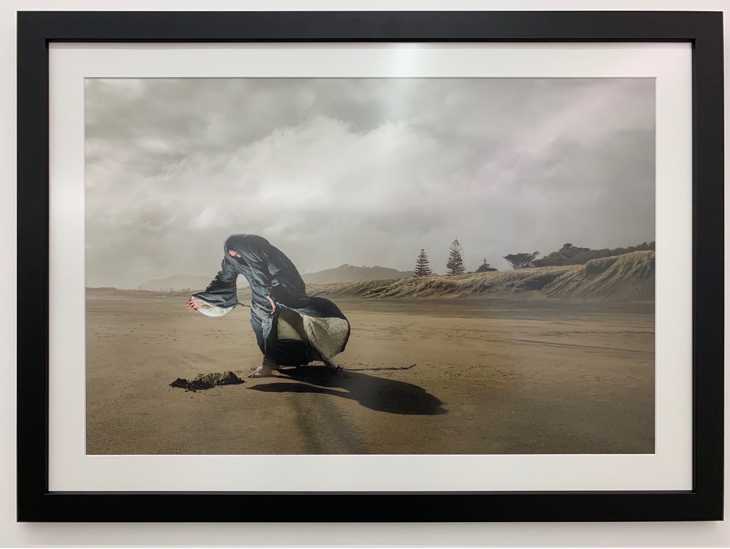
Fashion photographer David thinks of ideas by watching the news and talking to friends. ‘Coming to New Zealand,’ he says, ‘is going to make my heart strong. Shanghai is so fast everyone is trying to make money.’ He says that back home in the commercial sector he struggles with not being allowed to use his own ideas, yet his works, I think anyway, are racy and unique.
(David’s Levraimoi brand shoot, 2017)
Day 5
Fried
prawns for breakfast, again. David loves his prawns! Afterwards, he and Rubeta
return to the city to shop for clothes, shoes and earrings for their shoot
later in the week. When they return and unload their haul I ask Rubeta if she
has a story in mind. She shakes her head. ‘But you’ve bought the clothes?’
‘This
is how I work,’ she replies. ‘I buy the clothes and create a character and a
story around that.’
I
sense it’s been a frustrating day. Working away from home is tough. It looks
like everyone is just sitting around yakking, drinking tea, but I have no doubt
there are ideas aplenty beneath the bonnet.
Shoot Day
Someone poked the bear. Everyone is up before 8am. The energy in the lounge is manic. Rubeta’s fashion model broke her finger last night. I make some calls to try to find a replacement when the injured girl calls to say she’ll make the shoot after all. I feel for these guys. If they were at home in Shanghai they could make a quick call and fix the problem.
It’s
a race against the clock. We wait for the weather to clear. I watch David work.
He smiles a lot and has the rare ability to make his
talent feel relaxed and ready. Rubeta dresses her models for her film, one of
whom is Piji. Ha! Glad that’s not me!
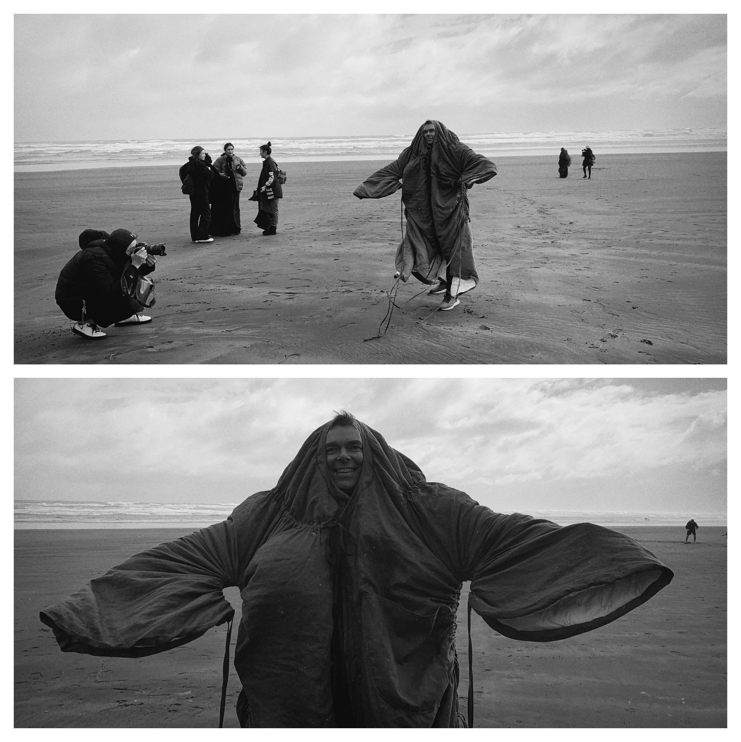
‘Justin, please wear this,’ David says, handing me a garment which looks
like a cross between a ridiculously huge sleeping bag and something a giant
Jawa from ‘Star Wars’ might wear.
‘Um, okay?’ I reply. ‘But what do I do?’
‘We go to beach. Murawai!’
‘David, mate, it’s raining. It’s pouring and windy, you’ll get black sand
all through your equipment.’
‘We try!’ he says, smiling.
Above – The author, thankful his
mates are nowhere near.
10 days later
It’s
the night of AMUSE BOUCHE, the exhibition at Hu’s Farm in Riverhead. A crowd
gathers. There is beautiful wine and food. Piji plays an original piece on the
guqin, along with supremo Kiwi musicians Richard Adams
and Nigel Gavin, and presents his artwork. A bleary-eyed Rubeta, up half the
night editing, walks us through her short video pieces ‘Before
the Storm,’ ‘Clone and Mirror,’ and ‘Reality Park.’ Shot in Murawai, K Road in Auckland, and Taupo, these
stories both challenge and charm the viewer.
As for David, his genius behind the lens confirms that you really can put lipstick on a pig.
Surround yourself with people who say yes rather than no. Ask questions, when you have the answers, question those answers. Don’t be afraid to screw up and don’t be fixated on the end result.