In 1964, Roald Dahl’s ‘Charlie and the Chocolate Factory’ was published by Allen and Unwin in the UK. It took over two years to write and underwent multiple transformations. Here are a few:
Originally there were ten kids – in the end Dahl settled for five.
There was no mention of Grandpa Joe
Until the very last minute, oompa loompas were called Whipple Scrumpets.
The original title was ‘Charlie’s Chocolate Boy,’ mostly because in this version Charlie Bucket climbs into a ‘chocolate boy’ mould in the Easter Egg room and is encased in chocolate. He is taken to Mr. Wonka’s house as a present for Freddie Wonka (Mr. Wonka’s son) and while there, Charlie witnesses a burglary. As a reward for helping to catch the thieves, Mr. Wonka gives him his own sweet shop, ‘Charlie’s Chocolate Shop.’
Also in the original manuscript, ten golden tickets were hidden in the Wonka chocolate bars every week. Mr. Wonka gave a tour of his factory every Saturday to that week’s lucky recipients. In this draft, Charlie finds a ticket on his first attempt. The other nine children on the tour are not introduced to the reader until they meet their respective ends.
Everything stinks till it’s finished. Things change. New characters appear. Have no fear. Just get it on the page!
There’s a line in the song ‘What a Wonderful World’ that says ‘They’ll know much more than we’ll ever know.’ This weekend I discovered first-hand what Louis Armstrong meant when I showed my kids – aged 7 and 9 – the first few pages of a new piece of work I happen to be very proud of.
I knew things weren’t going well when the first comment was ‘Are there any funnier bits?’ The next piece of advice hit me smack square between the eyes. ‘There are too many similies (like, what?) and sorry to say, Dad, where is your solution? You’ve mapped out the problem, but every story needs a solution.’
My book ‘The Dog That Ate The Bathroom’ with illustrator Guy Harkness is in full swing. It’s been fun choosing images. Above are some mock ups. Once the script was finished we opened up the phone lines on our breakfast show (Auckland’s Classic Hits) to see what bizarre items had been consumed by listener’s dogs. (Feel free to add to the list.)
Puzzle pieces, $6000 hearing aid
Had my tonsils out and they were next to the bed – dog ate them
Deceased pet rabbit which had been buried three weeks
Sheepskin rug, side of a pine table, the crutch of my knickers
100 vitamin tablets, a full fruit bowl and a gib board toilet wall
Last chapter of a book I was reading
4 seat belts 2 head rests and a heavy wooden garden gate
Cell phone, steering wheel, reading glasses and toothpicks
I’m stoked with the new cover for ‘Shot, Boom, Score,’ a kids novel I’ve been working on for a while now. It’s published by Allen and Unwin in February 2013 and is mostly aimed at 8-12 year olds.
My daughter is having it read to her class as we speak. Apparently ‘even the bullies who never read and never share their feelings and always throw snot when they should be listening really love it!’
So that’s good, I suppose.
Here’s a taster from the main character Toby:
I should tell you a bit more about my family and friends. You might have figured out my name is Toby, but you won’t know my surname. It’s Gilligan-Flannigan. There, I said it. I blame my parents. Thanks to both their stupid names, I’m stuck with the stupidest, longest name in the school. Sometimes all I want is to be called Jones or Smith. Then I wouldn’t stand out like a chicken with no head every morning when Mrs Martin-Edge does the roll call.
I’m the middle one in the family. Claire is four years older than me, and my brother Max is seven years younger. They’re both annoying, but at least Max doesn’t use all the hot water in the shower. Then again, Claire doesn’t poo her pants.
Neil Gaiman is a literary hero to many. What then, is his advice when you ask him the most important thing he’s learnt when it comes to writing? A man of many words, though in this case few. Nice one.
Great idea. Let’s pitch it to J.K Rowling’s publisher Bloomsbury and watch the cheques roll in. They would never have seen anything like it.
What do you do for the rest of the day?
Lazing about on the couch trying to catch thoughts might look like a part time job, but remember what Hemingway said: There is nothing to writing. All you do is sit down at a typewriter and bleed.
A cookbook! Seriously, cook books sell!
I’m pretty sure a recipe for cheese on toast is not in high demand. Thing is, you’ve got to do what you love. In my case, it’s eating, not writing about it.
Why don’t you get into erotic fiction?
Thing is, you’ve got to do what you…wait, let’s leave that one.
You know no-one’s reading books these days, right?
You may have a point, unless it’s a story about a wizard chef who loves nothing more than showing his magic wand to Christian Grey.
Somehow I made it onto the soon-to-be-released music compilation Kiwiana Goes Pop. Anyone who knows me knows this is a complete accident, mainly because I’m a writer first, part-time music hack second. However, because it helps to be honest about the creative process I’ll tell you how the song came about.
I had an AWFUL gig at a rugby club in South Auckland, where I was paid to entertain the crowd for a few hours. For whatever reason (lethargy, disinterest, lacking sense of humour) it was one of those nights where nothing worked. I survived, thanked everyone, slid my fee in my pocket and retreated to the safety of home. Once there, I got the guitar out and wrote Good Keen Metrosexual, a tune that arrived almost fully formed. My angry mood soon became one of jubilation. And now it’s on a CD. Isn’t life utterly, completely stupid sometimes?
In his book A Week at the Airport Alain De Botton confirmed something writers have always known: we don’t need the perfect study with the perfect view to do good work.
It makes sense. How many times have you written a surprisingly good scene, despite lying in bed with a hangover? Or completed that painful chapter in a noisy cafe with screaming babies all around? Alternatively, ever sat down, having had ten hours sleep – with a clear head and chore-free day on the horizon – only to be freaked out by it all?
When it’s going well, run with it. The story won’t care where it’s written.
Recently I was sent a personal invitation by APP (Asian Pulp and Paper) to visit their mill in Perawang, Sumatra, Indonesia. As an author, my main job as part of the ‘Cottonsoft Books for Change’ was to take books donated by the company to learning centres near the mill – where they’re in short supply. We plan to work with selected New Zealand schools this year to get more by donation.
More on Perawang soon, but first, Jakarta, a city of eleven million. Sunda Kelapa, a fishing port where nothing much has changed for hundreds of years. The Makassar schooners are impressive, as are the smiles of local workers. State of the water? Not so much.
Something I love to do when travelling is hire a taxi for a day and go for it. My driver in Jakarta was Agus, an amiable bloke who works 12 hours a day, six days a week and gets to see his young family – who live 250km away – once every six weeks. I took him to the zoo, bought him lunch and we swapped stories.
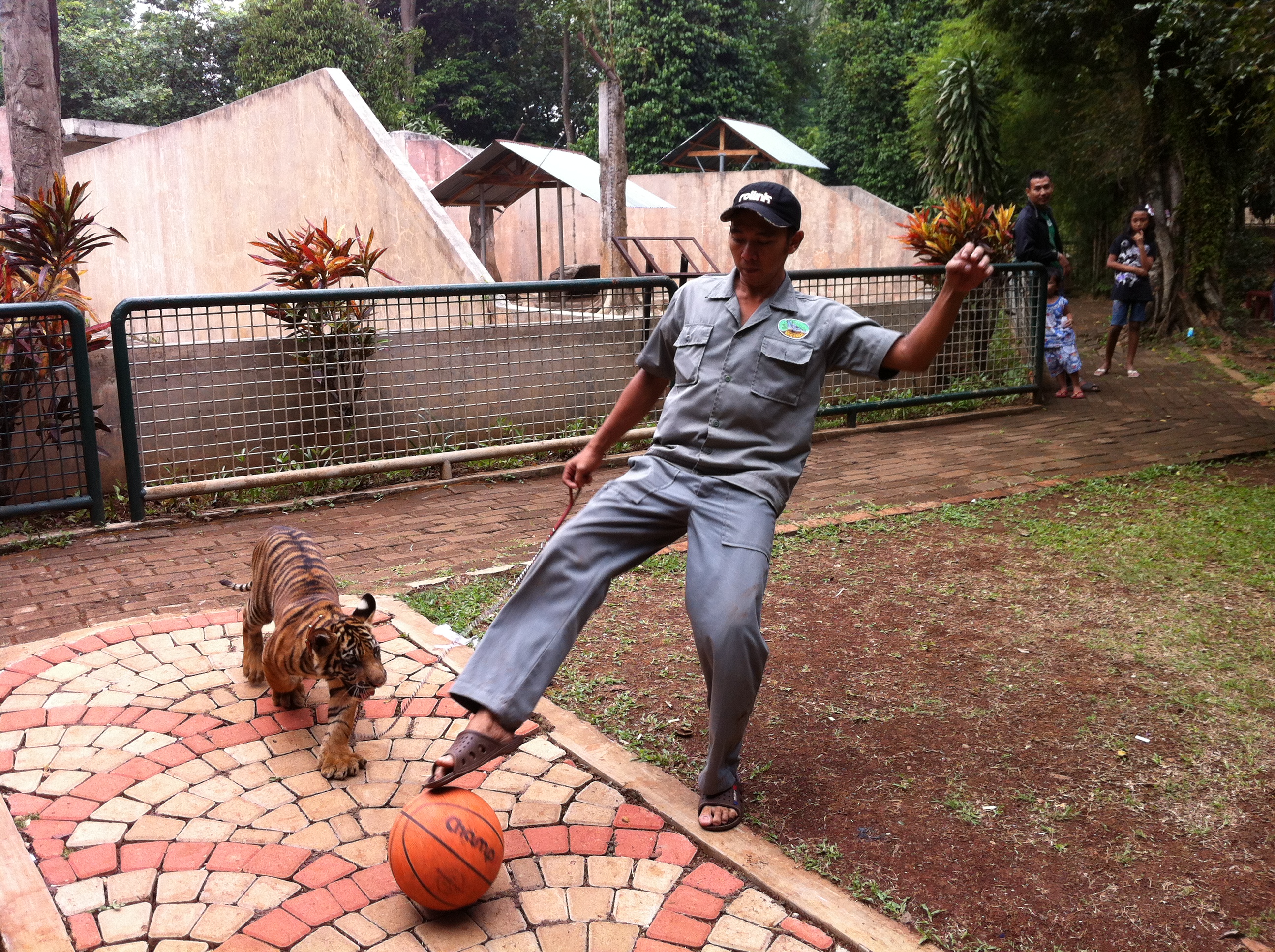
Jakarta Zoo was, let’s say, surprising. I wanted to see one of Indonesia’s badass national animals, the Komodo dragon. We also found orangutans who thought nothing of bottles, ice blocks and yoghurt containers being hurled their way. I was speechless. Agus checked his phone.
Indonesians are right into badminton, but also like a bit of soccer. No zoom or cage here.
Back in the city I heard calls of, ‘Hey Mister’ outside the Jakarta History Museum, also known as Fatahillah Museum. I thought maybe these boys were good candidates for ‘Books For Change.’ I asked to take their photo, which they seemed happy enough with. (Note: As a tourist, you do feel an idiot giving money but it’s better than the alternative.)
Outside the museum a ritual took place. I had no idea what was happening. A small child was wrapped in cloth in the midday heat and made to stand in the main square, while fire eaters chanted and prayed. Agus tried to explain: ‘Please don’t think this is common. It is something to do with their past sins,’ to which I replied, ‘I think we should move on.’
From Jakarta we flew with Darragh and Negla from APP to Pekanbaru, Northern Sumatra. A two hour drive from there and you’ll find yourself at Indah Kiat pulp mill, which employs 11,000 people. Pictured below are the conservation areas, shown to us by a charming guy named Ali who introduced me to Snakeskin fruit, possibly the tastiest on the planet.
We were shown through the Eucalyptus harvests which are replanted every five years. These ladies found it hilarious how inadequate my skills were. Funny, I thought I was actually doing all right. They all had smart phones and demanded a photo.
Many of the trees the ladies were planting had been cloned in the research side of the mill. Due to Indonesia’s perfect climate – very hot with bursts of rain – these trees grow incredibly quickly. And below – the result.
The Learning Centre in Pirawang helps the community around the mill. It’s used by 1500 people, has access to the Internet and a library. Sadly, the latter needs more titles – which was the reason for my visit. I had boxes of donated books and gave a talk about how I became an author. The language barrier meant the ukulele and rugby ball came in handy, as did a horrendous attempt at ‘Gangnam Style.’ The kids were brilliant, asked great questions (mostly through a translator) and didn’t stop smiling. Felt very honoured to be there. Video to come.
And then. Goodbye to entire families on motorbikes, chicken curry donuts, dragonfruit, massive insects, mosques waking you at 4.30 am, rice cakes, yellow watermelon, lontong soup, beef rendang, AK47 table lamps, half finished coffee houses and a fruit which, and I quote, tastes like heaven but smells like shit. Terima kasih, Indonesia!
Do not place a photograph of your favourite author on your desk, especially if the author is one of the famous ones who committed suicide.
Do be kind to yourself. Fill pages as quickly as possible; double space, or write on every second line. Regard every new page as a small triumph
Do give the work a name as quickly as possible. Own it, and see it. Dickens knew Bleak House was going to be called Bleak House before he started writing it. The rest must have been easy.
Do change your mind. Good ideas are often murdered by better ones. I was working on a novel about a band called the Partitions. Then I decided to call them the Commitments.
Do not search amazon.co.uk for the book you haven’t written yet.


 Somehow I made it onto the soon-to-be-released music compilation